
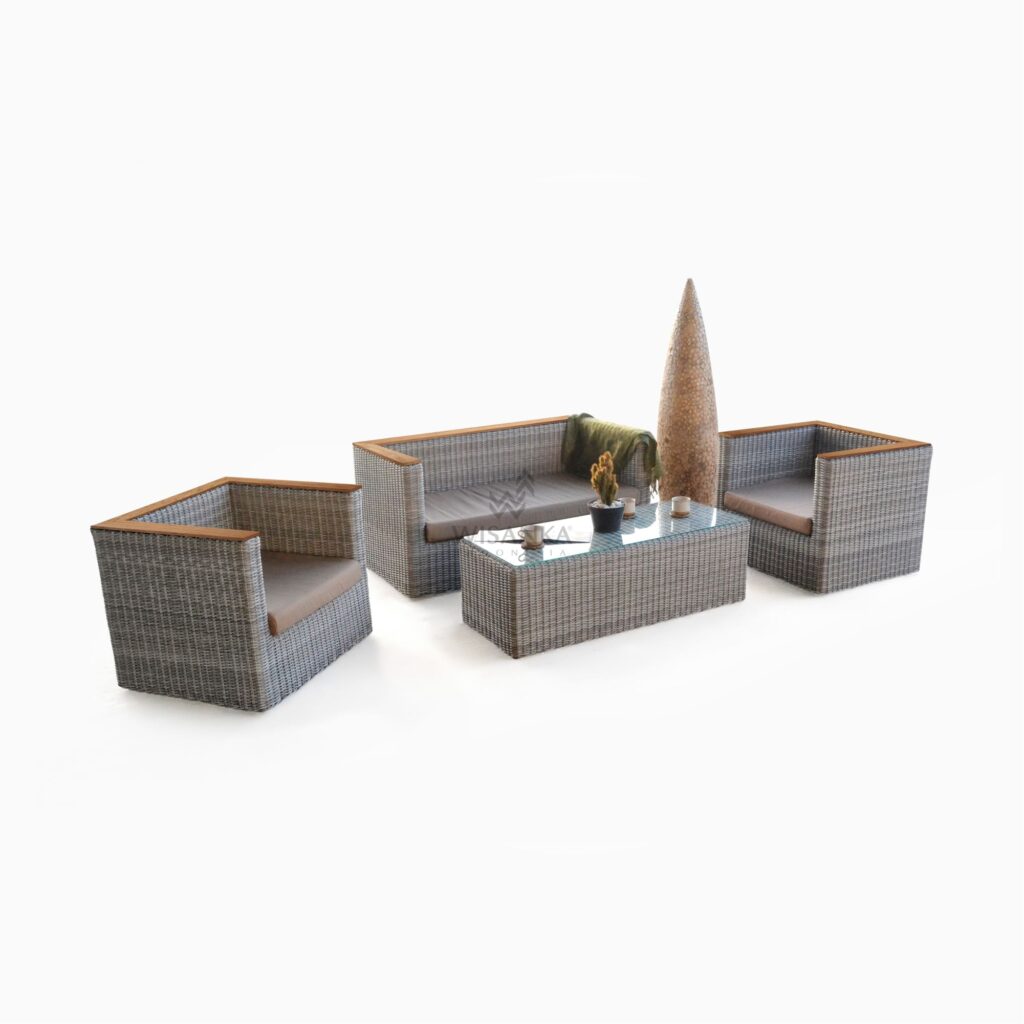
Outdoor furniture is one of the few purchases where your decision has to survive reality. It has to look good in photos, feel comfortable in daily use, handle rain and UV exposure without drama, and stay stable when temperatures swing. It also has to be practical: easy to clean, not constantly in need of refinishing, and not so delicate that you’re afraid to actually use it. When you compare the most common materials—solid wood (including teak), powder-coated aluminum, steel, and molded plastics—one category consistently delivers the best “total outdoor experience” for most climates and use-cases: synthetic rattan (also called PE rattan, all-weather wicker, resin wicker, or polyethylene wicker).
This article goes deep on what makes outdoor furniture genuinely “best,” where synthetic rattan wins, and how to choose high-quality pieces that won’t disappoint. You’ll also find a set of often-overlooked advantages of synthetic rattan—practical benefits many buyers don’t think about during the decision stage, and that brands rarely explain in detail. These aren’t “magical” claims; they’re grounded in material behavior, product design, and real-world usage patterns.
What “Best Outdoor Furniture” Actually Means
When people say “best,” they often mean “most expensive” or “most beautiful.” Outdoors, those shortcuts fail. The best outdoor furniture is the set you still enjoy using after a few seasons, when the novelty is gone and the weather has done its worst. In practical terms, “best” means a balanced score across durability, comfort, maintenance, safety, and aesthetics. It also means the furniture is appropriate for your specific climate: humid coastal air behaves differently from dry heat, and tropical sun is not the same as mild seasonal sunlight.
Another overlooked part of “best” is how the furniture ages. Some materials look amazing on day one but degrade in ways that are hard to reverse. Others might show small changes over time but remain structurally strong and visually consistent. Outdoor furniture is not just décor; it’s a piece of equipment you live with, move around, clean, and sometimes store. The best choice is usually the material that handles that lifestyle with the least fuss while keeping its comfort and appearance.
Finally, the best outdoor furniture should be easy to buy correctly. That means predictable performance, clear quality signals, and fewer hidden trade-offs. Synthetic rattan, when built well, checks these boxes more consistently than many alternatives.
The Outdoor Materials Landscape (and the Real Trade-Offs)
Before recommending synthetic rattan, it’s fair to acknowledge why other materials are popular. Teak and other hardwoods are loved for their premium feel, natural grain, and reputation for longevity. Aluminum is praised for being lightweight and rust-resistant. Steel can feel solid and strong, and it often comes in sleek designs. Plastic can be cheap, easy to hose down, and available everywhere.
But outdoors, every material has a “gotcha.” Wood needs periodic care to stay looking refined, and it can crack, check, or discolor depending on sun and moisture. Metals can heat up under direct sunlight, can scratch or chip, and low-grade coatings can fail in coastal environments. Plastics can fade, get brittle, warp, or look tired quickly, especially if the polymer blend and UV stabilizers are not high quality.
Synthetic rattan sits in a sweet spot. It’s designed specifically for outdoor exposure, and it’s built into furniture structures that can be both lightweight and strong. It offers the “woven warmth” of natural fibers without the same vulnerability to moisture and biological decay. Most importantly, it tends to deliver comfort and visual texture with less ongoing maintenance than wood and less heat-related discomfort than many metals.
Why Synthetic Rattan Is Often the Best Outdoor Furniture Material
Synthetic rattan’s biggest advantage is that it’s engineered for the outdoors rather than borrowed from indoor material traditions. Natural wicker and natural rattan can be beautiful, but they don’t love repeated wet-dry cycles, intense UV, and long exposure to humidity. Synthetic rattan is a response to those problems. It mimics the look and tactile texture of weaving while using durable polymers that can be stabilized against UV and designed for flexibility.
A well-made synthetic rattan chair or sofa typically consists of a sturdy frame (often aluminum) wrapped in woven PE rattan strands. That combination matters. The frame provides structural integrity and corrosion resistance, while the weave provides comfort, grip, and style. The result is furniture that feels inviting and “soft” visually, yet holds up across seasons when you choose the right quality tier.
Synthetic rattan also wins in the category most buyers don’t measure but always feel: daily livability. It’s comfortable against bare skin, it’s less likely to become painfully hot than metal, and it doesn’t require the same seasonal ritual of sanding, oiling, or refinishing that wood can demand. If your goal is to actually use your patio, terrace, poolside, or garden—not just stage it—synthetic rattan tends to be the more forgiving choice.
Comfort: The Quiet Superpower of Synthetic Rattan
Comfort outdoors isn’t just about cushions. The frame temperature, surface texture, and airflow around your body all affect how long you want to sit. Synthetic rattan has a natural advantage here because the woven surface creates micro-gaps that reduce the “sealed surface” feeling you get with solid plastics or metal slats. That slight airflow can make seating feel less sticky in humid weather.
There is also a tactile advantage. Synthetic rattan provides a gentle grip and a little flex, which can feel more supportive than rigid plastic and less harsh than some metal designs. Even without thick cushions, a well-tensioned weave can distribute pressure in a way that feels balanced. This matters more than people think, especially for dining chairs or loungers where you might sit for longer periods.
Another comfort point is sound and vibration. Metal furniture can clink, scrape, and amplify noise when moved. Wooden pieces can creak as joints expand and contract with humidity. Synthetic rattan furniture, especially with good feet and a stable frame, often moves more quietly and feels calmer in daily use. That may sound small, but it adds up in real life.
Durability: What Holds Up in Sun, Rain, and Humidity
Outdoor durability is about resisting three enemies: UV radiation, water exposure, and temperature cycling. Synthetic rattan is designed to handle these more gracefully than many people expect, provided the rattan is high-quality PE with proper stabilizers. Unlike natural fibers, it won’t rot, and it is far less attractive to insects. It can be cleaned without worrying about swelling, delamination, or biological damage in the way some natural materials can suffer.
Frames matter as much as the weave. A strong aluminum frame with good welding and proper powder coating (or anodizing) will resist corrosion and keep the furniture stable. If a product uses steel frames without excellent coating, it may rust from the inside out, especially near the beach. The best synthetic rattan furniture pairs all-weather wicker with rust-resistant frames and smart drainage design in the cushions.
Durability also includes mechanical wear: rubbing, friction, and repeated sitting. A higher-grade weave maintains its tension and resists fraying better. Cheap strands can become brittle or fuzzy over time, particularly if they are thin, under-stabilized, or poorly extruded. The “best” synthetic rattan is not just about the material category; it’s about choosing the right construction and spec.
Low Maintenance: The Advantage That Actually Saves You Time
Wood can be beautiful outdoors, but it often comes with a maintenance contract you didn’t sign. Even teak, which is famously durable, changes color and texture without care, and many owners end up dealing with cleaning routines and seasonal oiling depending on the look they want. Metals can be low maintenance, but scratches, chips, and corrosion near salt air can become persistent annoyances. Plastics are easy to hose off, but they can stain, chalk, or fade in ways that are hard to correct.
Synthetic rattan’s maintenance pattern is simpler. Most of the time, it’s rinse, mild soap, soft brush, and done. The texture can hide light dust better than smooth surfaces, and the woven look remains visually forgiving as long as you keep it reasonably clean. You also avoid the “finish anxiety” that comes with wood—where the wrong cleaner can strip oils or the wrong scrub can change the surface.
Maintenance is not just cleaning; it’s also storage and seasonal prep. Synthetic rattan furniture generally tolerates being covered for rainy months and doesn’t demand the same climate-controlled storage that some wooden pieces prefer. If you want outdoor furniture that behaves like a reliable tool rather than a delicate showpiece, synthetic rattan fits that mindset.
Style: Why Synthetic Rattan Looks Better Longer
Style is not only about the initial design; it’s about how the furniture looks after exposure to real conditions. Synthetic rattan has an advantage because its texture and weave pattern can make minor scuffs, light dust, and normal aging less noticeable. Smooth materials show scratches and chalking more clearly. Wood shows stains and watermarks, especially when humidity changes and mold or mildew tries to establish itself in shaded spots.
Synthetic rattan also offers a wide design range. You can get modern, clean silhouettes with tight weave, or more relaxed, bohemian looks with thicker strands and rounded profiles. It pairs easily with neutral cushions, warm lighting, greenery, and natural stone. If you want a cohesive outdoor environment that looks “designed” rather than “assembled,” the woven look helps tie elements together.
Another underrated aspect of style is how synthetic rattan interacts with light. The weave creates subtle shadow patterns and depth. That gives your outdoor space a layered, premium feel even when the color palette is simple. In photography, the furniture looks richer because the surface is not flat. In daily life, it feels warm and intentional rather than purely functional.
Synthetic Rattan vs Teak and Other Wood: The Honest Comparison
Teak is legendary for a reason. It’s strong, naturally oily, and can survive outdoors for years. If you love the look of natural wood and you enjoy caring for it, teak can be a wonderful choice. But teak is not automatically “best” for every buyer. Teak can be heavy, it can get hot in direct sun, and it will change color unless treated. Many owners either accept the silver-gray patina or invest effort to keep it golden.
Synthetic rattan competes by reducing the friction of ownership. You get a warm, organic vibe without needing a wood-care routine. You also get a surface that typically feels comfortable and less temperature-reactive. In humid regions, synthetic rattan avoids many of the mold and mildew headaches that can develop in wood grain, especially in shaded areas with limited airflow.
Wood also has an impact and scratch profile that some people underestimate. Outdoor life involves moving furniture, stacking pieces, and occasional bumps. Wood can dent and scratch in visible ways. Synthetic rattan can also be damaged if abused, but the weave tends to mask minor wear, and the structure can be more forgiving in daily handling. For many households and hospitality settings, that difference is worth more than the romance of real wood.
Synthetic Rattan vs Aluminum and Steel: Heat, Touch, and Corrosion Reality
Aluminum is a great outdoor material, especially for frames. It doesn’t rust like steel, it’s light, and it can look modern and clean. However, as a primary sitting surface, metal can be less forgiving. It can heat up quickly under direct sun and feel harsh without cushions. Metal also shows scratches and chips clearly, and once a coating is compromised, corrosion can creep in depending on the environment.
Steel can feel sturdy, but outdoors it’s a corrosion management project unless the finish quality is excellent. Coastal environments accelerate problems, and even inland humidity can cause issues over time. Metal furniture can also feel slippery or cold when wet, and it can be noisy when moved.
Synthetic rattan, especially over an aluminum frame, avoids many of these issues while keeping the furniture light. The weave is comfortable to touch, more temperature-stable, and visually warmer. You still benefit from metal’s structural strengths in the frame, but you don’t accept metal’s comfort penalties as the main surface. That combination is one reason synthetic rattan is so widely used in resorts and poolside environments.
Synthetic Rattan vs Plastic: Price Is Not the Whole Story
Plastic furniture is often the default option because it’s accessible and cheap. But “cheap” is not always cost-effective. Low-quality plastics can fade, become chalky, crack, or deform when exposed to heat and UV. Even when plastic remains structurally okay, it can look tired quickly. The surface also tends to show scratches, and the aesthetic can feel temporary.
Synthetic rattan is also polymer-based, but it’s used differently. The woven structure adds strength through geometry and distributes stress across strands. It also creates a more premium look. High-quality synthetic rattan uses better stabilizers, better extrusion consistency, and better construction methods than the lowest-tier plastic patio chairs.
If you care about your outdoor space looking intentional, plastic often demands a “cover it up with cushions and décor” strategy to feel elevated. Synthetic rattan starts elevated and stays that way longer. That difference matters if you use the space for hosting, hospitality, or brand image.
Often-Overlooked Advantages of Synthetic Rattan
Here are several benefits that are rarely explained in detail, but can matter a lot in real-world ownership. These are not miracle claims; they’re practical advantages tied to how woven polymer furniture behaves.
One overlooked advantage is surface temperature comfort across mixed sun and shade. Metal tends to create “hot spots” where sunlight hits. Wood can warm up unevenly too. Synthetic rattan’s weave and polymer structure often reduce the intensity of those hot spots, making the furniture feel more consistently comfortable when the sun shifts. This can change how usable your seating is during peak daylight hours.
Another under-discussed benefit is micro-impact damping. The woven surface can absorb tiny shocks and vibrations in a way that rigid surfaces do not. That matters when people sit down quickly, when kids climb, or when furniture gets moved frequently. Over time, that slightly softer interaction can reduce stress on joints and fasteners compared to rigid, high-impact designs. It can also make the furniture feel “less harsh” even before you add cushions.
Synthetic rattan can also support quiet operation and lower noise pollution. Outdoors, noise carries, and furniture scraping can be annoying in a residential neighborhood or hospitality setting. Woven surfaces and well-designed feet often reduce scraping sounds compared to bare metal or some wood designs. This is a subtle quality signal that people notice emotionally even if they don’t describe it technically.
There is also a practical benefit in visual resilience under uneven cleaning. Outdoor furniture rarely gets cleaned perfectly evenly. Smooth surfaces can show streaks and water marks. Woven synthetic rattan often hides minor cleaning inconsistency because the texture breaks up reflections. For busy households or commercial spaces, that means the furniture can look “presentable” more often with less effort.
Another point is grip and stability for cushions and accessories. Flat metal or plastic surfaces can allow cushions to slide, especially if the upholstery fabric is smooth. The texture of synthetic rattan gives a natural friction that helps cushions stay in place. That can reduce your need for ties, non-slip pads, or constant readjustment.
Finally, synthetic rattan offers an underrated advantage in repair strategy. When wood finishes fail, you often refinish large areas for a consistent look. When metal coatings chip, you may need touch-ups that never match perfectly. With synthetic rattan, small repairs can sometimes be localized—reweaving or replacing a section—without needing to refinish the entire piece. This depends on how the furniture is built, but the repairability path is often more practical than people assume.
How to Choose High-Quality Synthetic Rattan
Not all synthetic rattan is equal. The difference between “amazing for years” and “disappointing after one season” is usually construction, not the concept. Start with the frame. The best outdoor synthetic rattan furniture typically uses aluminum frames with strong welds. If a seller won’t specify the frame material, be cautious. Weight can be a clue: very heavy can indicate steel, which is not automatically bad, but it requires better corrosion protection.
Next, evaluate the weave. High-quality rattan strands are consistent in thickness and color, and they feel flexible rather than brittle. If you see fuzzy edges, cracking, or a plasticky shine that looks cheap, that can be a sign of lower-grade material. UV resistance matters, especially in tropical climates, so look for products described as “UV stabilized” or “all-weather wicker.” While marketing terms can be abused, reputable manufacturers usually provide more detail.
Check how the weave ends are finished. Clean terminations, tucked ends, and tight wrapping around corners indicate skilled assembly. Loose ends and irregular tension often predict future problems. Also look at feet and contact points. Outdoor furniture lives on tile, stone, concrete, or decking, and good feet reduce wobble and protect surfaces.
Cushions matter too. Even the best frame feels average with poor cushions. Look for quick-dry foam, breathable covers, and ideally removable zip covers for washing. If the furniture is near a pool or in high humidity, cushion quality becomes just as important as the weave.
Best Outdoor Furniture Setups Where Synthetic Rattan Shines
Synthetic rattan performs especially well in lounge zones: sofas, sectionals, daybeds, and armchairs. These are the pieces where comfort, skin feel, and long sitting sessions matter most. Woven texture looks premium and makes the area feel like an extension of your indoor living space. It also pairs well with outdoor rugs, side tables, and warm lighting, creating a complete atmosphere instead of a purely functional patio.
Dining is another strong category. Synthetic rattan dining chairs tend to be comfortable for long meals, and they don’t feel icy in cool evenings or scorching in midday sun. When matched with a durable table surface—such as tempered glass, ceramic, or high-quality composite—you get a dining zone that is easy to maintain and visually cohesive.
Poolside settings are where synthetic rattan often outclasses alternatives. Chlorine splash, wet swimsuits, and constant sun exposure are harsh conditions. Synthetic rattan is typically more forgiving than wood in this environment and more comfortable than metal. If you choose quick-dry cushions or mesh-style designs, you can build a poolside setup that stays usable and stylish without constant worry.
Care and Maintenance: Keeping Synthetic Rattan Looking Premium
Caring for synthetic rattan is straightforward, but a little consistency goes a long way. Regular rinsing removes dust and pollutants that can dull the look. A soft brush helps clean the weave without damaging it. Mild soap and water are usually enough for most situations, and harsh chemicals are rarely necessary.
If you live near the sea, rinse more often. Salt can settle on surfaces and accelerate wear on metal components, even if the weave is fine. Keeping salt buildup low preserves the frame, fasteners, and feet. If cushions are removable, store them during extended rain or use breathable covers to reduce mildew risk.
Avoid high-pressure spray at close range directly into the weave, especially around joints and terminations. While synthetic rattan is durable, aggressive pressure can force water into places you don’t want it and can stress finishing points. Gentle cleaning wins over time because it preserves both the weave and the frame.
Common Myths About Synthetic Rattan
One myth is that synthetic rattan is “just plastic” and therefore cheap. The reality is that polymer quality varies massively. High-grade synthetic rattan is engineered with UV stabilizers, color consistency, and extrusion quality that has very little in common with the cheapest molded plastic chair. The end product can be premium, durable, and suitable for professional hospitality use.
Another myth is that synthetic rattan can’t look luxurious. In practice, many of the most photogenic resort-style outdoor spaces rely heavily on synthetic rattan because it delivers texture and warmth that metal furniture often lacks. The key is choosing the right weave density, color tone, and cushion pairing.
A final myth is that synthetic rattan is automatically maintenance-free. It’s low maintenance, not zero maintenance. You still need occasional cleaning and sensible cushion management. But compared to wood refinishing or corrosion troubleshooting, the upkeep is usually simpler and less stressful.
Buying Checklist: What to Look For Before You Commit
Quality outdoor furniture is easiest to buy when you focus on a few non-negotiables. Confirm frame material and construction quality. Check that the weave is consistent, UV-stabilized, and tightly finished. Inspect corners, joints, and under-frames for stability. Make sure the cushions match your climate and usage, and that covers are removable if possible.
Also consider sizing and layout. The best furniture is not just “good,” it fits your space and lifestyle. A slightly smaller sectional that allows easy movement can be better than a massive set that looks impressive but makes the area feel cramped. If you entertain, prioritize seating flow and side table access. If you relax daily, prioritize lounge depth, arm height, and cushion firmness.
Lastly, think about long-term availability. If you’re buying for a hospitality project or you want to expand later, choose a style line that can be reordered. Consistency is part of what makes an outdoor space feel premium over time.
The Best Outdoor Furniture Choice for Most People
If you want outdoor furniture that balances durability, comfort, style, and low maintenance, high-quality synthetic rattan is one of the smartest choices you can make. It avoids many of the ongoing care demands of wood, the comfort drawbacks of metal surfaces, and the aging issues of cheap plastics. It also delivers a warm, textured aesthetic that makes outdoor spaces feel inviting rather than purely functional.
The key is to buy synthetic rattan the right way: strong rust-resistant frames, UV-stabilized weave, careful finishing, and cushions built for your climate. Do that, and you’ll likely end up with the kind of outdoor furniture that still looks and feels “best” long after the first season—because it was designed for outdoor life from the start.
If you want, tell me your climate (coastal / humid tropical / dry heat), the setting (poolside / garden / rooftop), and the type of set you need (dining, lounge, sectional, daybed). I’ll map out an ideal synthetic rattan configuration and a quality checklist tailored to that environment.
